Thursday, December 8, 2011

Final leg of 3 tribe tour


December 7, 2011

Pearl Harbor day. I am in the Philippines, back in Manila now. It is amazing to think about the history here – 70 years ago today was when the Japanese attacked Pearl Harbor. It was actually December 8 that they invaded the Philippines, but it was simultaneous to the attacks on Pearl Harbor due to the international date line. That is something I did not learn until we moved here.

What a whirlwind trip! I am glad to be back home with Ginny and the kids. They are not so much little kids anymore, with one going to college next year, one in high school, and one in middle school. Hard to believe. But it still is just as hard to be separated from them, and it is especially hard to be apart from Ginny.

Highlights of the last leg of our trip – We flew into Maitem ne Egis, where our friends the Epps are ministering to the Agta people. Again, it is a mixed language situation, in which many Ilocano families have moved into the area for the fishing and other business opportunities there. It is still an isolated place not connected to by any major roads, but apparently the business opportunities are good enough to make some people want to move there. Naturally the Ilocanos also plant and grow their gardens to supplement their food when they move there. However, the majority of the people there are Agta, and since they are basically an unreached people group, they are the ones to whom the missionaries are focusing their efforts in church planting.

Our purpose in being in Maitem ne Egis was to assist the missionaries in their becoming fluent in the Agta language. It is always nice to report that they are doing a great job! A missionary living in an isolated situation like this has to know how to run his own language learning program. It is like everything else that we do as missionaries living in isolated situations. We have to be our own carpenters to build and repair our houses. We have to be our own plumbers, and build and maintain our own water systems, along with building and maintaining our own sewage and septic systems. We also have to be our own power company, and build and maintain our own solar electric systems. We need power for lights at night, and to have power for a computer where all of one's language and culture data is kept.

In the same way, we have to be our own language school, and run our own language learning program. There are no classes in the Agta language – it can only be learned by someone who runs their own language course. Let us not forget culture – we don't want to speak the Agta language and not know the deeper meanings of what they are trying to say. In order to have good relationships, necessary for ministry, one must speak the language well and fully understand the culture. Quite a challenge!

The missionaries that live amongst the Agta have dedicated their lives to bringing the Gospel to this unreached people group. We enjoyed spending time with them. It is hard living out there isolated from civilization. But there is no greater joy than seeing the unreached come to know Christ, and these missionaries are fulfilling the command of our Lord. How I miss being among the Palawanos! Yet I am thankful that we are still able to serve in this way.

The Agta are a different race from the more common Malay race of Filipinos – they are more commonly referred to as one of the Negrito races – kin to the Australoid populations of New Guinea. Their black skin and “natural afro-hair texture” makes them look African in nature. However, DNA research has indicated that they are actually the most genetically distant group of people from Africans (see the Wikipedia article on Negritos here). I would be interested to know how committed evolutionists explain that one – it is evidence to me that the genetic makeup for all races originated in the first 2 humans that God created – Adam and Eve. The genetic code for having what we would call African features actually existed in all of the earliest humans, and these features have become dominant features of people in 2 different parts of the world, not just Africa, which does not seem to follow the accepted progression of thought for an evolutionist.

We had one very sad incident happen while we were there, which still pains me to repeat, but I will do so for the sake of asking for your prayers. The day before we left an Agta family came by with their 2 or 3 year old kid. He had accidentally tipped over the pot of boiling rice and it had spilled over most of his back, buttocks, and lower legs. We all gave them some first aid, but the poor child was too damaged and he died during the night. If he had been able to live through the night, we might have been able to take him out by helicopter the next day, but it was not possible. Please pray for this family that lost their dear son in a sudden tragic accident.

The area of Maitem ne Egis, like so many other areas in the Philippines, is a mixed language area now. In the past you would have only found Agta people there, but today there are Agta, Ilocano, probably some Itawis and Ibanag, as well as Tagalog speakers, being the trade language. Like other locations in the Philippines, the missionaries must have a very broad base of vocabulary in order to minister to the needs of multi-lingual people.

For example, take the word blood. In English we basically have just that one word, although old English might have used the word humour in a generic sense. In Tagalog and Palawano, they use the word dugo for blood. In Ilocano, the word is dawa. In Cebuano, the on-line dictionary lists dugo and gawi, along with several other options that in some way might have some referred meaning relating to blood. In order to communicate the truth of the Gospel to as many people as possible in a mixed language group, one would need to know how to say blood in more than just one language.

There are very few places left in the Philippines where there almost purely monolingual. The place where we ministered among the Palawano was unusual in that regard. Because we were up in the mountains, the people there still maintain a somewhat pure Palawano language. This is in contrast to most Palawano areas that are near roads – they are often able to speak Tagalog. It is still better to minister to them in their heart language of Palawano, but to go into an area like that, the missionary would really need to know both.

Up among the Agta, the trade language is actually Ilocano, not Tagalog. However, most people know enough Tagalog from having gone to school for some time, and so when a new person moves in from another area that doesn't know Ilocano, they communicate in Tagalog. Also when government officials come into the area to promote health programs or such, they communicate also in Tagalog. So Tagalog is widely used and understood (though it would not be effective to minister in up in that area).

This is an interesting aspect of life here in the Philippines. In the past, if you traveled all over the Philippines, people that lived in an area where Tagalog was not the trade language did not speak Tagalog. Many of the missionaries in the past that went to tribal areas in Northern Luzon communicated in English to tribal people, because that was what they learned in school. Not so today – now the trade language is Tagalog. People still want to learn English and try and learn to speak it, but Tagalog is now much more prevalent. That is also why the official name of the language is Filipino, and it is considered only to be based on Tagalog.

By the way, when you say Tagalog, it is pronounced like this: tah-GAH-log. Most English speakers will say TAG-a-log when they first read that word, but that is incorrect.

Enough for now. I hope to put this in an email update by the time my birthday rolls around. Don't know if I can get there that quickly, though.

Ok, here are the pictures. More to come on another post. Click on any picture below to enlarge.

getting the chopper ready for the next flight

heading towards the mountains away from civilization

a washed out bridge along the way

river coming down from the mountains

break through past the jungle to the coastal area

black sand beach with missionary house prominent

the isolated coast

chopper on the ground, people waiting for us

inside the missionaries' home

view from the back porch

rainy weather most of the time we were there

home looking up from the garden
people coming by to get help with their tools as kids look on


houses in the Agta village

reviewing some CLA principles on the computer

unload and reload the helicopter while the engine is still running

storms the last couple of days made the seawater muddy

on the way out, a waterfall coming down the mountains from the rain
2 of the missionaries' tribal language helpers.

A bat cave we flew by on the way in.

Agta kids playing

One of the Agta villages.

Agta kids in a native Agta house.

A beautiful waterfall that we flew by on our way out.
The 2 on the left and me on the right make up our consultant team. The other 2 are the missionaries in the area.

Friday, December 2, 2011

The Language Barrier - the Ga-dang (and peanut coffee)


12/1/2011
It was time for role-play. This was our communication task. Having arrived the day before by helicopter, now we had 2 Ga-dang native speakers, both of whom were also pretty good in Tagalog (at least enough to communicate what we wanted to do). At first we had the missionary pretend he was visiting one of the Ga-dang men in his home, and then properly excuse himself to go home and help his wife. The idea is that we are looking to see how well the missionary speaks and acts according to the customs of the native people he is working with. They played the role just fine. (click on any picture below to enlarge)

Checking communication tasks with native speakers

Life among the Ga-dang - pounding rice

Arrival by helicopter


Then, for comparison, we had one of the Ga-dang men pretend that he was married and visiting in the other man's house. He also was supposed to excuse himself and go home to his wife. The roles were understood. The 2 men thought it was really funny that they were “actors” (artista). We set up the scene, and the young man said, “Ok, I have to go home now to my wife.” Instead of the proper Ga-dang response, the older man forgot he was doing a role play, looked at him and said, “What? I didn't know you were married!” Of course, then the younger man broke down laughing!

Time for take 2! Artista we are not. :)

Maybe it would be good here to write up a description of how we do a language and culture check. First of all, we are moving into places where the language barrier is a significant barrier to people understanding the Gospel. There in the Ga-dang village where I was this morning, I went outside the house we were staying in and walked up to talk to a neighbor. In this “tribal” area, the people are not really tribal like the Palawanos were, but are more just like Filipino farmers who have a different language. At least, that is what one might think when one first goes in.

However, even after a few minutes of conversing with my neighbor in Tagalog, which he speaks pretty well from having gone to school, it was pretty clear that there was a lot he would not get in Tagalog. Use of Tagalog is increasing in the population for sure, especially because of television shows that are broadcast nation-wide, but for the most part explaining the deep truths of God's Word clearly is still going to have to be accomplished in the local language in the Ga-dang area.

The only person available now to take God's Word to the Ga-dang are these missionaries. This can be a sensitive issue. Us missionaries have sometimes made the mistake that it will always be necessary for foreign missionaries to take the Gospel to these remote places. That is changing rapidly – there are increasing numbers of Filipino Christians who have a vision to take the Gospel back into the remote towns and villages and finish getting the message to all these areas. But that is all for another discussion. The point of this discussion is how a cross-cultural missionary is able to move into a new area, learn the language and culture, preach the Gospel so that it is clearly understood, and establish a church.

Why language and culture? Why not just language? It is because culture and language are inseparable. Here is a simple illustration. Three tribal bible teachers are going to hike to a neighboring village to teach the Gospel there. The new missionary wants to accompany the tribal men, so he goes along. However he wants the tribal men to walk in front of him, so that he will not feel that he is imposing upon them. When they arrive in the village, the village people are cold with them and do not receive the teaching, and really are not interested in listening at all. Why? Because in this tribal culture, the order in which outsiders approach a village is of supreme importance. By not having the white missionary in front as a person of perceived higher status, the bible teachers communicated to the new village that they did not respect people of higher status. They were thought of as people that do not show respect, and therefore their message had no credibility.

That is culture. Culture and language are inseparable. When a tribal woman in a certain tribe sitting on her porch says “come in and visit” it is different from saying “come up and visit”. One is a proposition of an illicit affair, the other is a polite way of acknowledging a visitor. The missionary would want to respond appropriately. There are so many things in a culture that are intertwined with the language. Our job as Culture and Language Consultants is to help the new missionaries in tribal areas to learn to recognize these things. Also, since there are no language schools in these areas in order to teach the new missionary how to speak and act in a given area, he or she has to figure it out for himself. Our job is to help coach them through setting up their own learning program so that they can get to the point where they can teach the Gospel clearly.

Of course, there are always going to be mistakes that are made, especially at the beginning stages. However, the missionary who has been somewhere for several years and still has not learned that “come in” means “let's sleep together” and “come up” means “let's visit” will not be very effective in preaching the Gospel. He will not have good relationships with the people he is trying to reach if he doesn't understand the little nuances of the culture. The people make great allowances for mistakes when he first moves in. After several years, a missionary is expected to know these things. If he learns them quickly, within the first couple of years, then he establishes a pattern of excellence and respect among the people, which will make his message more credible.

It was a good visit to the Ga-dang village. They gave us peanut coffee (roast peanuts pounded and then mixed into hot water), and I liked it better than real coffee! No caffeine rush, which is preferable to me. Also we locked the keys to the missionary house inside the house once! I had to ask one of the men to borrow a stick to mash open the window - they were a bit concerned about that! They gave me an axe, and we got in. Ha! So now I have broken into someone's house with an axe! Well, at least it was supervised.

We have now finished with the 2nd tribal visit, and one more to go. The weather is not cooperating right now, and we are waiting for it to clear so that we can fly in by helicopter and assist the missionaries in another tribal area.

tying the generator to a water buffalo cart for transport

the Ga-dang village from the air

pointing out the area we will fly through

some houses still have thatch roofs, though most do not

village kids

tasting peanut coffee (no coffee grounds were available, so fried peanuts were mashed and made into coffee instead)

a village house on the left with its corresponding rice house on the right

Tuesday, November 29, 2011

Island travel, on to another jungle for Christ


11/28/2011
“We need to be at the boat at 7am in order to make it to El Nido in time to catch the shuttle going to Puerto.” sabi ng host missionary.

We just finished a language assessment with a friend of ours on another island. He is working in an area where the Gospel has not reached yet, and is doing well in his progress for learning the local language of the island! That means another unreached tribal area of the Philippines will soon have the Gospel!

So there we were, ready to go at 7 am, and our guide didn't show up! We waited, and waited, and finally decided to walk across the island to the boat by ourselves, pulling all our bags in a hand cart. When we got to the beach, we saw why our guide didn't show up – low tide! Our guide, or boat captain, had been drinking the night before, so he didn't pull the boat out past the tidal area. There was our boat, sitting on the sand! And we had to get to town that day...

Well, in a situation where time is of the essence, and you are on an island waiting for the tide to come in so that you can leave, what do you do? Nothing, of course! All we could do was sit and wait for the tide to come in. Well, we could have tried to swim across the open ocean... No, probably not a good idea.


While waiting for the tide to come in, we looked at squid eggs in the water, and talked about different things. Finally the tide has risen by about 6 inches, and so we called some other people over and we began pushing the boat towards the deeper water. It took about 10 of us, but we made it! We were off the island by 9 am, and our host called the shuttle van and asked them to hold the van for us. I don't know how the other passengers took it, waiting for 2 extra hours, but they didn't say anything to us. Once we were on the road, fantastic...

And of course, at Roxas we stopped at the Vietnamese restaurant for lunch. Wow. The most amazing food ever, and all for only 100 pesos. I always get the “beef stew with noodles”, and I never get tired of it!

Back in Puerto Princesa, we settled down and got ready for the next leg of our trip, which began this morning!

So, yesterday morning I was on a small island in the middle of the ocean, and today I am up in the northern part of the country, getting ready to go by helicopter into another tribe tomorrow!

We are in Tuguegarao, and have looked at our flight base up here. The base actually belongs to another mission, and they have shared the use of it with us. Their ministry is doing really awesome things for god – they record Gospel lessons in 4 or 5 of the major dialects of this area, and then broadcast them on different radio stations at designated times so that people can hear, come to know Christ, and be encouraged.

I was talking to the missionary in charge of this ministry, and he had some very keen insights into the world around us today. He said, “Why do you think that we have all this technology, the ability to travel, and the ability to send radio messages and internet email and all those things?” He believes that God restrained us from acquiring this knowledge until recent times.

Think about it from this perspective – the ancient kingdoms could build pyramids and giant statues, navigate by the stars and do all kinds of amazing things, but they couldn't look at a duck taking off from the water and figure out the simple mathematics of flight? It is not that complicated – wind speed over a wing, increase the lift over the drag, and you get something airborne. Leonardo Da Vinci may have been ahead of his time, but perhaps it was because God was only just beginning to allow man's mind to be opened up to this technology. And why would He do that now? So that we could use this technology to finish getting the Gospel out to all ends of the earth. That is what God is all about – the completion of taking His Gospel message to every people, tongue, tribe, and nation!

So while he broadcasts Gospel messages, we send people out into the hills. And with all these different means of taking the Gospel to the nations, soon every tribe will have been reached! This is what we hope for and pray for, and what we labor for!

Tomorrow we will be going into another tribal area, to a location off on a remote hilltop, where the Gospel has never penetrated. The people there are not really “tribal” like the Palawanos we served with, but they are still unreached with the Gospel and greatly in need of the message being preached there.

Click on any picture below to enlarge.


getting on the boat to go to the island

a view of Palawan as we jut out to sea

view from the boat as we head out to the island in the distance

a sleeping house in the lagoon on the island

after crossing the island through a coconut grove, the missionary houses emerge in the clearing

there are lots of pigs on this island
 
view of the beach on the side away from the boats

preparing one of our meals

a German-Romanian salad served on an island in the Pacific


private beach area

nice white sand beach

Konrad and I at the beach in between sessions

our boat was stranded waiting for the tide to come in

at low tide the people gather fish and clams from the reef

view of the one really nice house in the village from the reef at low tide

squid eggs

Once the tide started to roll in we were able push the boat out towards deeper water.

on our way back to the Palawan main island

view of the shore

fishing boat based on the main island

view of the El Nido cliffs from the bus terminal


Thursday, November 17, 2011

The Menti Palawano are now hearing Bible lessons!

The Menti Palawano are now hearing Bible lessons!
Praise the Lord, for the first time in history, the Brooks Point Palawano in Menti are now hearing Bible lessons in their own language! Our partners have started teaching, and below is a copy of the email we received to describe how things are going.

We appreciate your prayers for us, our partners, and the Palawano as they continue to teach the lessons. This is why we labored in the tribe for so long, and why we are continuing to work here in the Philippines!

Here is the email from our tribal co-worker Elise:

Dear Partners in the Gospel,

On Monday morning, I said to my literacy class, "This is a day we've been waiting for. This is the reason God sent us here. Today, Dave will start telling God's story to all who want to listen. We have lots of fun in our literacy class, but it's a really serious and important thing that you are learning to read. Yes, anyone can listen to the teaching of God's Word, but you will be able to read it for yourselves. For others, they have to wait to be given God's Word like a child being given a drink from the hand of their mother. But you are like one who has his own cup, and can drink from it whenever you want. The ability to read is like having that cup".

So on Monday afternoon, the public teaching of God's Word finally began. In all 22 adults gathered, and some children, in various different family groups. They listened intently.

Dave began by telling the people that in the beginning, there was no one and nothing, only God, and that God was always there. As he described the character of God, eveyone was listening intently and heads began to nod in agreement.

"God had no source, and will have no end. He didn't suddenly appear. He always was. He needs nothing- not food, or air, or water. He is Spirit. In the beginning, there were no stars, no sun, no moon, no earth. There were no trees, no ocean, no rivers, no animals, no air, no people. Only God. And He was always there."

Pilno said, "Banar! That's true!"

Showing them a jar of rice, Dave said, "How many grains of rice do you think are in this jar? That's right, you don't know unless you count them. God doesn't have to count them. He knows how many grains of rice there are in every legkew (rice storage house) on Palawan! He knows how many hairs there are on every head! He doesn't even need to count them! He knows everything! Wherever you go, He is there. He is with our family in Australia. He is in every cave, and in the sky. You couldn't hide from Him. He knows everything, even what you are thinking."

"Banar!" said Pilno again.

As the people left to go home, we encouraged them to come to each teaching time, so when we got ready for them again on Wednesday, we were discouraged that of the first group of eight, only Pilno and Mulok came. Another eight came in the next group, with a couple of new listeners. So they heard the second lesson, and were amazed that God's Word was written by so many people over such a length of time.

It turns out that this week, the lowland town leaders have called various meetings that some of the Palawanos are expected to attend. And not only that, but many of them are preparing for a rice festival at the chief's village, and so when he says it's time to pound rice, then that's what you have to do.

Pilno, and also Tossito, one of Dave's language helpers said, "We are going to tell people they need to come! This is really important!"

Over lunch today, Tossito and Lito, one of the other language helpers, said to another guy, Pitio, "We all need to know what God says. Palawanos and white people. We all have the same original grandparents, and because of their sin, we are all separated from God. We are like the Israelites trapped at the Sea that's Red. Only God can make a way for us to be saved. It's very dangerous if people don't listen! They need to know the way back to God or they are lost!"

The two of them went over to Dave and Julie's place after that, where Mulita, a lady, was telling Dave she didn't want to listen to the teaching. Dave said, "Cousin, we aren't going to force anyone to listen." Tossito promplty said to Mulita, "You know, you really should listen! There is a second death and only God can save us." She looked right at him..."Oh?!" she said. "Hmmm. I'm going to think about it."

We talked with Pilno and Mulok, and decided to wait to carry on the teaching till next Wednesday when some of the distractions are out of the way. Meanwhile, we are taking every opportunity, over meals, sitting on the porch, hanging out at people's houses, to talk over what the people have heard. Some seem like they couldn't care less, while others are gripped by the truth. Tossito and Pilno said they are going to be telling people they need to listen. Pilno said, "We need to listen together, so that we can be of one mind. This is truth!"

Pray that the spark will become a flame, and will fan to life and sweep through this place!

Thank you for praying for Lupis! The tribal leaders met about his divorce, and told his wife she has to stay with him. So they are both here now, and both listening to the teaching. Praise the Lord!

Thank you for praying for the literacy teachers! The are doing REALLY well, and we are planning to buy a computer for them and Ludi to learn how to type. They are very excited! Today they went down to the market place, where just a couple of months ago, they would go to get drunk almost every week. They said, "We don't want to do that now. We have changed." Please pray for a total heart change, not just a change of behaviour! Tabung says that he prays to God every night, and hasn't had one of his "seizures" (or possible demonic attacks) since. He said after the first lesson that he was turning over the new thoughts about God in his mind all night!

In a week or so, I have to go to Manila for an immigration interview, and as I explained to the class this morning that I'd be away, Nurnito said, "Egsa (cousin), you just show us what to teach, and Tabung and I will keep teaching while you are away!" I was so encouraged!

I'm writing this from Philippino pastor's house down river. He and his wife minister to a mixture of lowland Palawanos and other lowlanders on the edge of the jungle. As I passed by one of the homesteads on the way here, I talked to a Palawano family who just lost their 17yo daughter, 7 months pregnant, to leukemia. She left behind a young husband and a 3 yo boy.We talked about why there is death and suffering, and about God, about how He loves the people He made, and wants them to be restored to Him. The mother said, "Egsa, you can come and tell us when my husband gets back from the next valley!" Pray for this hurting family!

Please go to battle on your knees for all these precious souls! Please ask God to give them a desire to listen to His Word that is stronger than the desire to make money downriver, stronger than the excitement about feasts and festivals. May the rice festival they are preparing for be the last one in this place where the spirits are thanked for the rice, instead of the true God.

May He soon receive the reward of His suffering (Isa. 53), the souls and worship of a people Christ died to save.

Please pray for Dave as he prepares and teaches the lessons to many groups. Pray for his health especially.

Please pray for the NTM UK Bible School graduates, Denis and Ella, who are proving to be a GREAT help here. They have both been battling sickness, but have done so much to help with repairs and producing literacy materials.Please pray for Pastor Job and Anna as they preach the Gospel in the lowlands.

Please pray for a solution for our communication issues, that somehow, we can get internet again in the village. We are greatly hampered without it.Please pray that an upcoming Immigration interview will go well so that my visa can be renewed. I have to go to Manila in a couple of weeks to do that.Please pray for the literacy curriculum I am preparing for teaching in the UK next March, God willing.

Again, thank you so much for standing with us. You are a vital part of the team!

Trusting Christ for a harvest of Palawano souls in His time!
Elise

end of our co-worker's email

Keep in mind, that because we have lost internet connection in our village, Elise has to hike downriver 2 hours to get to a location where she can connect by her cell phone to the internet. We hear from her about once every 2 or 3 weeks. Thank you for your continued prayers for the teaching!

Please pray for my upcoming trip next week! I am going to be traveling to 3 other new tribal areas to help the new missionaries with their language and culture studies. One of these already has a small group of believers, but the other 2 have not started the teaching yet because they are still working up to the language level! My job, in company with our consultant coming from the States, will be to coach and assess the progress of the missionaries in their tribal language studies, so that those areas also will soon be able to hear the Gospel!

Pray also for Ginny and the kids at home while I am gone!

We are thankful that God allows us to be involved with what He is doing in the Philippines!

George for all of us
George, Ginny, Isaac, Sarah, & Abby

Monday, September 26, 2011

getting to the airport and flying through a typhoon


Today was a crazy day. We have a typhoon barelling down on the Philippines – typhoon Pedring. It is supposed to be one of the most massive storms to hit the Philippines in years. They closed all the schools in Manila for the afternoon.

I flew to Palawan today, right across the southeast edge of the typhoon and through the rain bands that have been drawn up due to the low pressure area at the center of the storm. It was a bit of a scary flight. The plane made a hard heavy noise on takeoff, and then we had a lot of turbulence the whole flight down. The pilot announced that we were at 36,000 feet, but looking out the window we were inside clouds the whole time. There was no blue sky visible even at that height, so you can see how big this storm must be.

To get to the airport from our place, I had called for a taxi to come pick me up the night before. I gave the taxi company my cell phone number and they said that they would text me at 9 am to let me know the status of the vehicle. 9 am came and went, and no word from the taxi company. I figured, ok, sometimes they forget and don't call. So I waited. And waited. At 5 minutes to ten I called them, and they said sorry, they didn't have any taxi that could come here because of the rain (whatever!). So I asked why they didn't call and let me know, and they said they sent a text message. They read out the number they sent it to, and it was the wrong number! They had mixed up the last digit of my cell phone number, so I didn't know that I had no taxi.

Fortunately I had planned for this sort of contingency by planning to leave early. I headed out the door with my small backpack stuffed inside my large hiker's backpack and started walking down the road towards the place where I could catch a taxi. It is about a half hour walk along that road, and sometimes there are pubic jeeps that come there, but only about once every hour. I didn't really feel like walking because it was raining, but I did anyway. As I left the house, I whispered a prayer which was half thanks for knowing that He would grant my request and half “Lord please get me to the airport.”

Last month when I took a taxi to the airport, it took about 4 hours to get there because of heavy traffic. So I was expecting it to take about that long also today. After walking for only about 15 minutes, a utility vehicle came by, which I thought was the public transportation service, so I flagged it down. They stopped, but when I got there, it turned out they were just private citizens driving the same kind of vehicle that the multi-cabs often are made from! I think they felt bad for me, a white guy carrying a large heavy pack, walking alone on the road in the middle of a rainstorm. So they picked me up and gave me a ride down to Ortigas where I was able to get in a public multi-party taxi called an FX.

From there I told the guy that I needed to go to the airport. He said he wasn't going to the airport, but he would take me somewhere where I would be able to pick up a regular taxi more easily. So we headed down the road and picked up the passengers he needed to pick up, and kept on going. When we got to the semi-highway, he saw an empty taxi and started honking at him and flashing his lights at him. The taxi pulled over and we pulled over, and I got out and got in the taxi. Then that taxi took me to the rest of the way to the airport. A very creative way to get there, no doubt! God is good!

I was a little wet and very early, so I waited in the waiting area for about an hour and a half before they opened the line to process the tickets going to Palawan.

I started off this blog entry by talking about the plane, so I will finish it there also. As I mentioned, we were 36,000 feet, with tons of turbulence, and no blue sky. When we landed at the airport, I didn't feel the usual feel of the tires hitting the runway. I realized after-wards that was because the tires were hydro-planing. I also noticed that we just weren't hardly slowing down at all as we skidded along the runway. I prayed, Lord, please let this plane stop and let us not go sliding off the end of the runway! Finally after a long time, we came to a stop. It seems the other end of the runway had better drainage than the end we landed on. There were heavy rains and a fairly decent wind going across the tarmac as we got out of the plane. My compliments to the Zest Air pilots who made sure that we landed safely.

And all praise to the Lord, who has preserved my life once again for the completion of His work.

And one bit of cultural insight. On the way to the airport, we passed a very large Catholic church. My taxi driver made the sign of the cross as we went by. I asked him what you call that, and he said “sign of the cross.” So I asked him what they said in Tagalog, and he said “Antangan” ( I think – can't remember for sure). But he said that is a deep Tagalog word. I asked him what he would say if he was instructing his children to do the sign of the cross and he said he would say “sign of the cross ka” or something like that. He indicated he would not use the word “Antangan” because it is a deep Tagalog word.

Then I asked him why he makes the sign of the cross, and he said “Para sa pagpuri kay Cristo.” That was an answer that I did not expect! For the praise of Jesus! I thought that was cool.

When examining sociological constructs from a Christian point of view, it is always encouraging to see elements of Biblical Christianity coming out unexpectedly like this in the beliefs of the common people. This led to a short conversation on how you please God and on how the scriptures say that we please God by faith, by trusting in Him. Unfortunately, my taxi driver wasn't really interested in pursuing the conversation any further than that.

Now it is time to get ready to head into the tribe once again! It will be supply buying for the next few days before heading down.

George

Wednesday, September 21, 2011

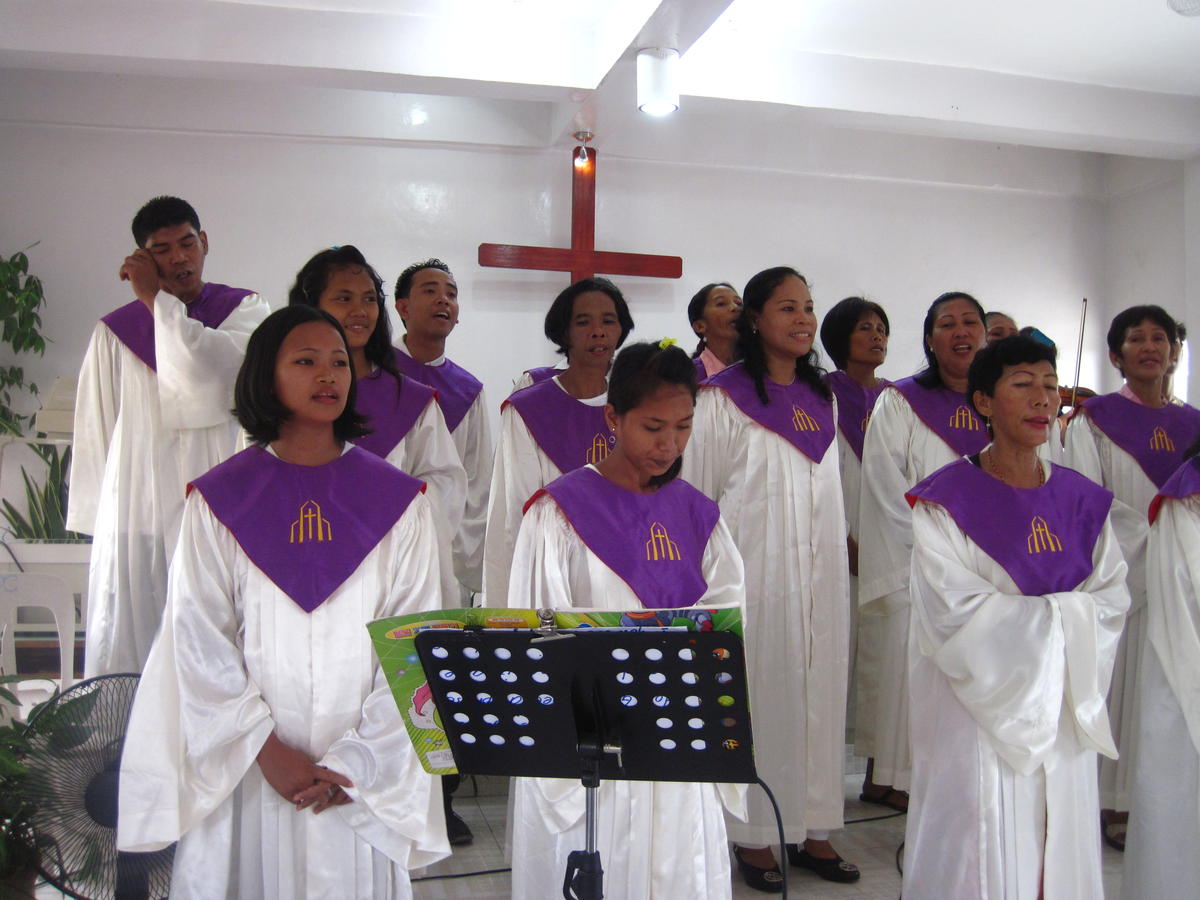
ministering in a Filipino church

Thank you all for your prayers this past weekend as we went and ministered in a Filipino church. It went amazingly well, and we are thankful for the opportunity to minister there.

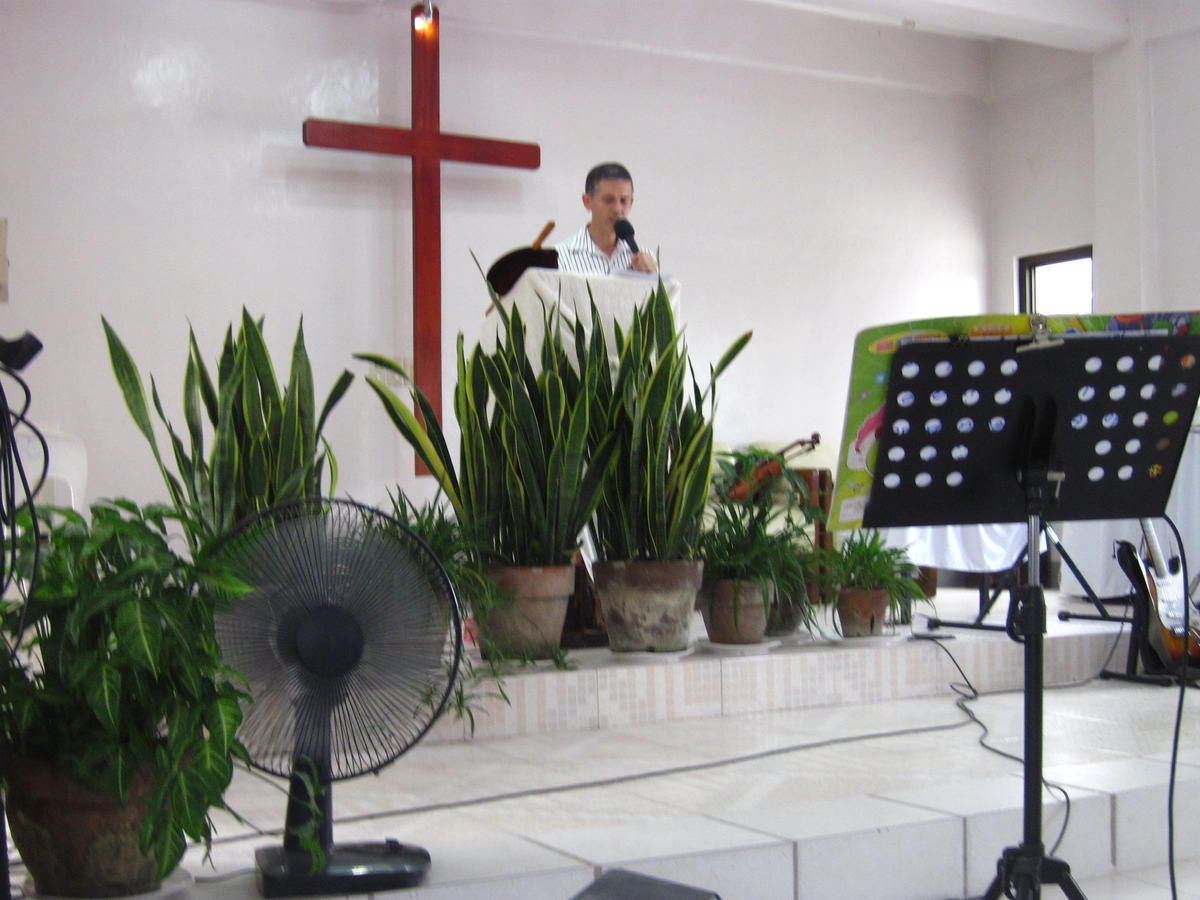
I could not believe I was able to continue preaching in Tagalog for a full hour! The Lord helped me, of course, and that whole time was not spontaneous – it was a prepared message that I had written, and received help in preparing from one of my old language teachers. Nevertheless, I was continuously interrupted with choruses of “Amen!” during the sermon, and several people asked us to come back! So praise the Lord, I believe He was glorified, which is always our intent.

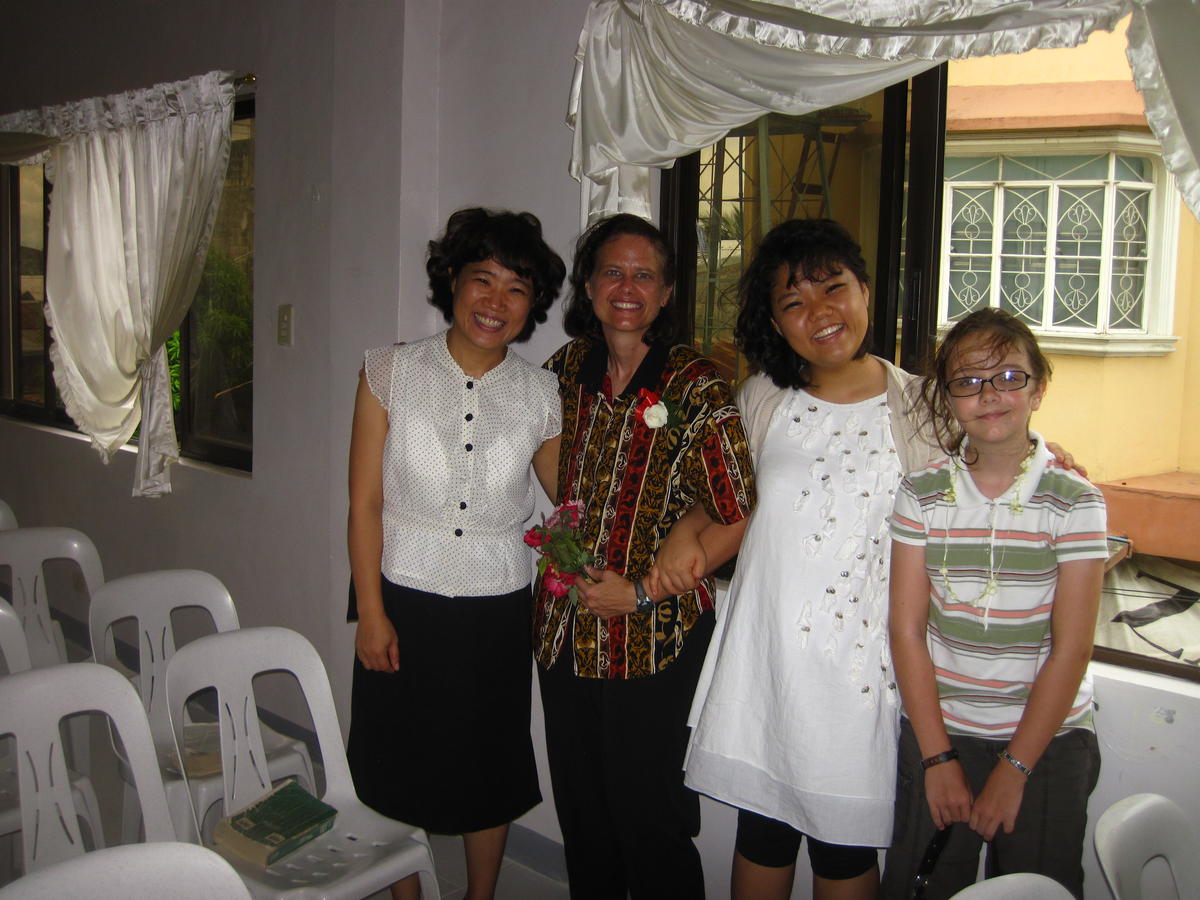
I spent some time talking to the family about the church and the work going on there, and we are pleased that the Lord has opened the door for me to do some part time ministry there. The church is a needy place, in need of some solid biblical teaching in their language, and it would honor the Lord as well as the memory of the Korean missionary who planted the church, who was murdered at random by a crime syndicate halfway across the city over a year ago. He moved his family to a country other than his own in order to serve God among a poor, needy, and unreached people, and there his blood was shed in the service of God. Now He serves God in heaven, where there are no tears or sorrow, awaiting the resurrection.

The main reason that his family is able to continue serving here in the Philippines among the poor is, of course, because God has called them to remain here. However, another reason is that they made a very important decision early on in their family. They told me that when their kids were little, their father decided to put them in Filipino school instead of an international school, because they were in the Philippines and wanted to become like the people (which is such a very Christ-like motivation). As a result, I believe the family is well integrated into the Philippine system, and their kids feel comfortable here. That would be a very hard thing to do if you come here when your kids are older, because the culture strain would be excessive. However, starting your kids off and raising them in the local system has served this family very well. This again illustrates the positive side of the principle that you reap what you sow. The father sowed seeds of faith, and his wife and children continue on in joy because of their father's faith, which has become their own.

My work at this church will be part time, and will be fully integrated into my new duties of studying and learning the principles of CLA (Culture and Language Acquisition) in order to train to become one of our field's language consultants. It is amazing how the Lord has worked this out in His perfect timing for me to be able to accomplish exactly what I need to do for our mission, and also serve the needs of a local church at the same time. At the same time I will continue to be making trips back and forth into the Palawano tribe. So life is about to get very busy!

Oh, and by the way, they didn't ask us to get up and sing, thankfully! That would have been a total disaster! We did enjoy singing along with the congregation the various hymns in English, Tagalog, and Korean, but no “special number” was required of the Olsons, and we are especially thankful for that!

Here are some pictures - click on the link below each picture to view a larger image:

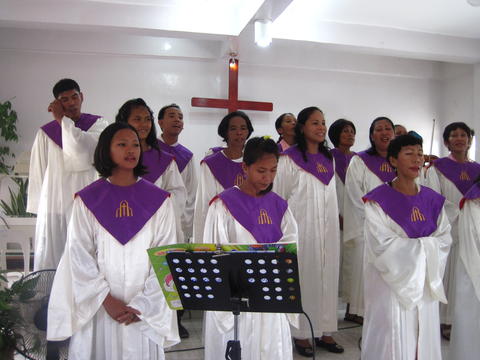
the church choir
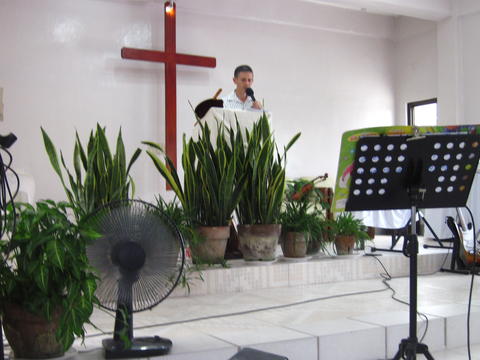
George preaching

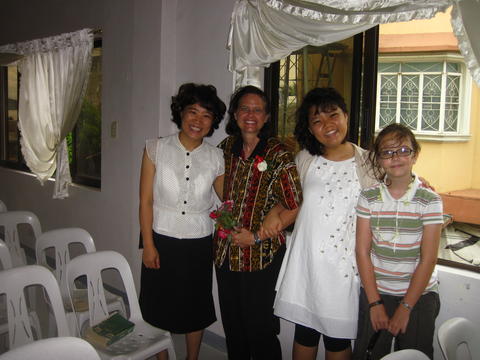
My family with the Korean missionary family

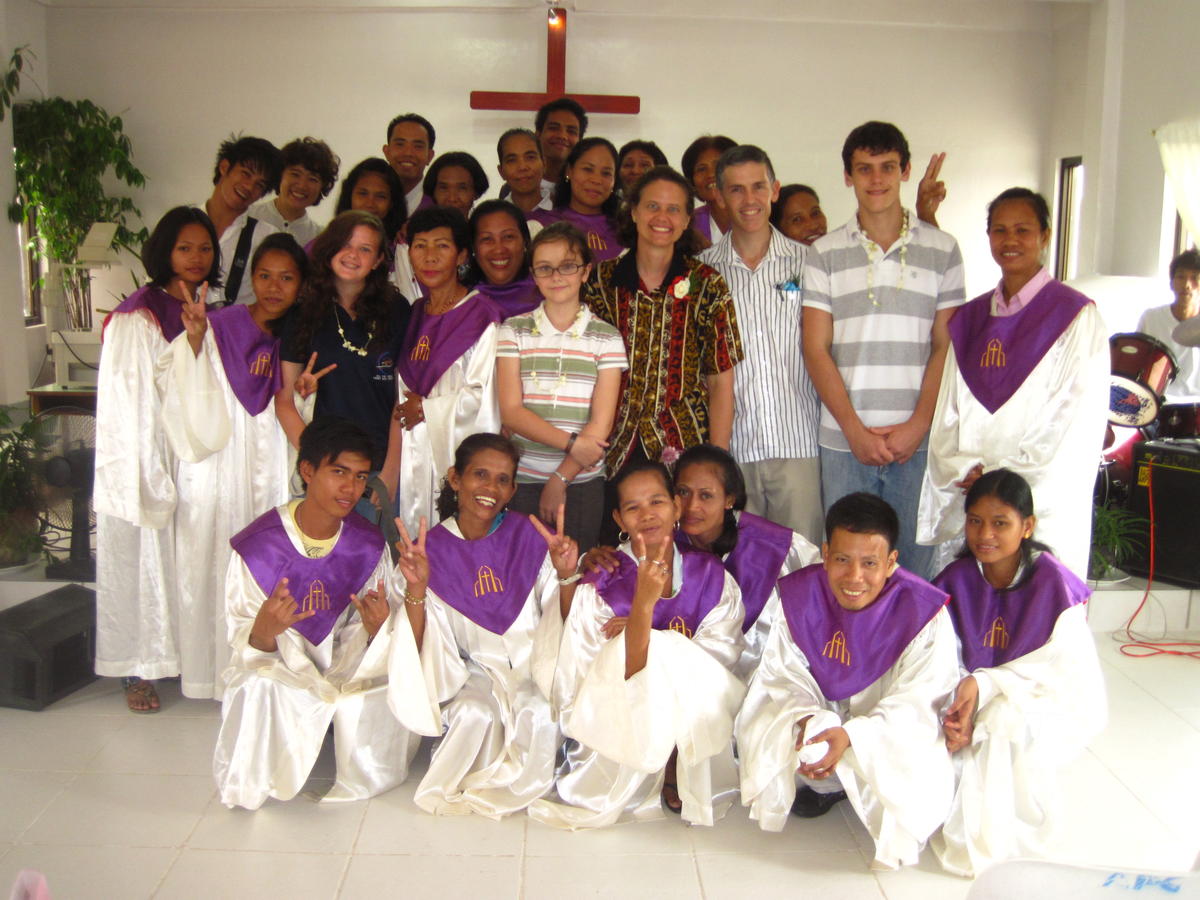
Picture of all of us with the choir after the service

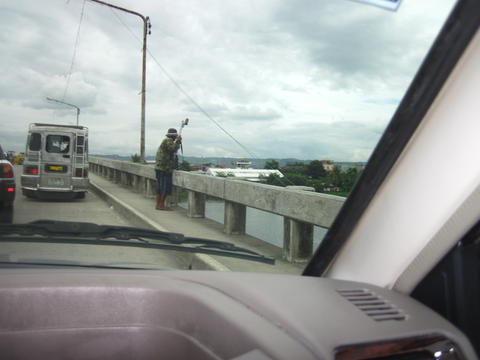
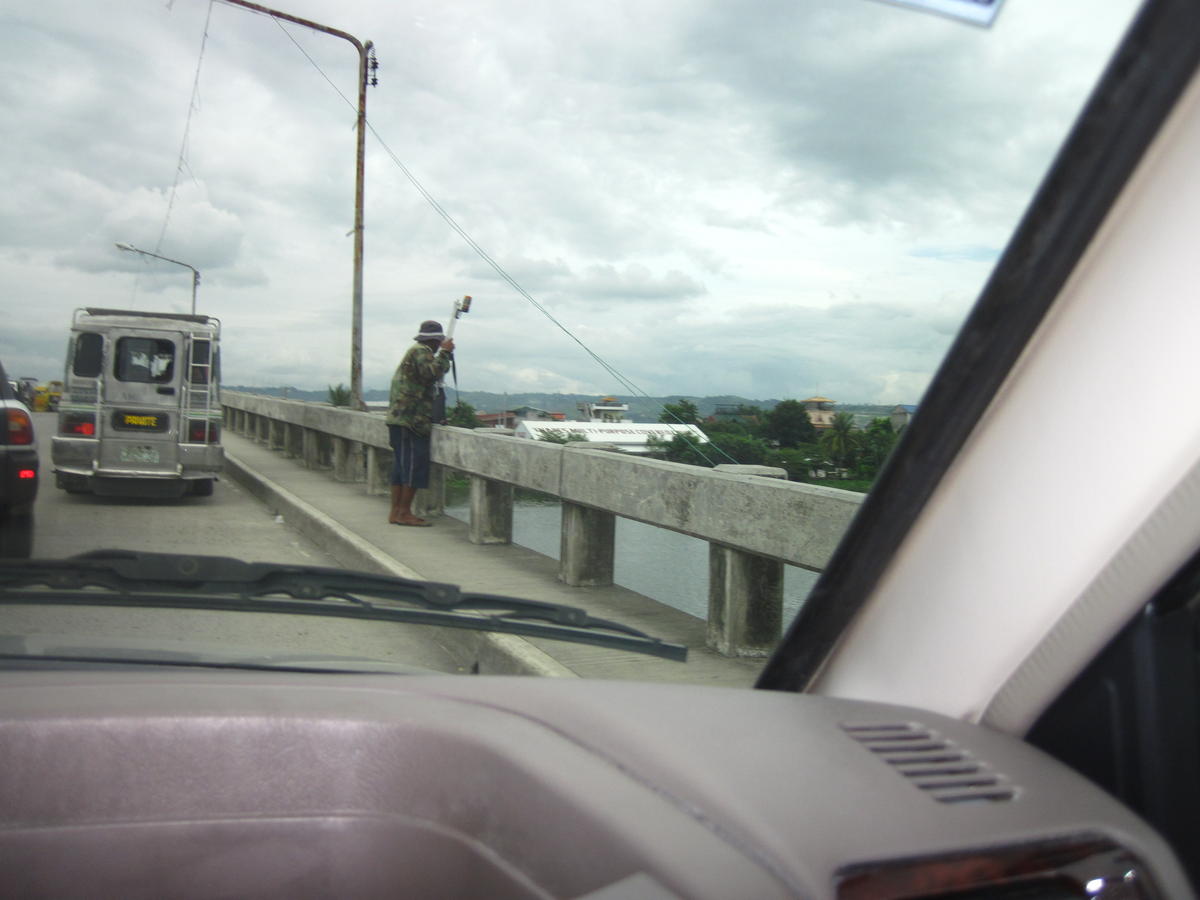
On the bridge going to the church there are men with guns - fishing guns! They fire a little harpoon with a .22 caliber or other small cartridge into the fish in the river about 35 feet below and then haul the fish up by a line tied to the harpoon.