Saturday, October 30, 2010

Raji

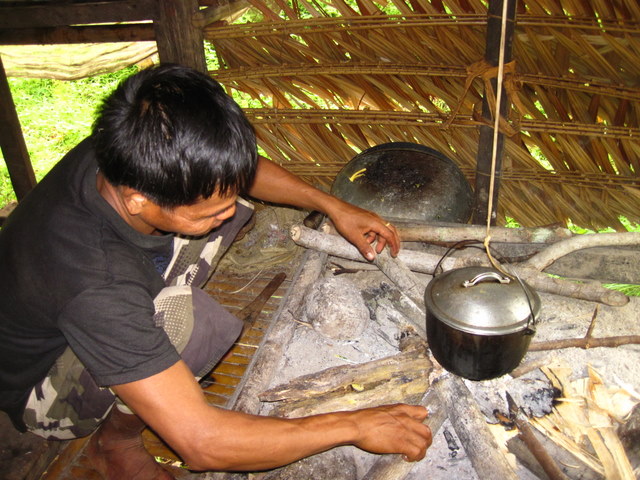
I wanted to write a little about Raji and his life, so you can pray for him. He is one of the middle sons of the main clan that lives in our area. When he was a kid, he told me, he chopped down a tree near a river, and the tree fell on the knee of a marunding spirit that lived there. The marunding spirit got angry and afflicted Raji’s knees in revenge. They both got infected, and one swelled up to the size of a watermelon. He was about 9 or 10 years old at the time, I think. Everyone remembers Raji’s swollen knees. The infection caused some permanent damage to his knees, so that he is not able to carry anything heavy very far. Most of the Palawanos head up to the high mountains several times a year to harvest the tree sap called begtik, but Raji is unable to go with them. When you look at his legs, they are considerably smaller and weaker than other men his age, but as long as he doesn’t carry lots of heavy loads, he seems to get around ok now.

About 5 years ago, a lady in one of the 2 clans living here (we’ll call her Rumita) lost her husband. It was a very unexpected death, apparently. He had been sick, but had just recovered and decided to work hard in his field all day. A hard day of work, with little water, combined with a liver that had frequently fought off malaria and a weekly bout of drunkenness is what did him in. All of a sudden he just keeled over. He was a fairly young man, too, late 30s or early 40s. They buried him right away (as is their custom), and the main witch doctor told his spirit not to come back to the village, that they were going to take care of his wife and kids. Nobody else could see his spirit except the witch doctor, and so afterwards they all asked, “What was he (his spirit) wearing when you talked to him?”

The witch doctor turned to one of the men who helped bury the dead man and asked, “What was he wearing when we buried him?”

The helper replied, “A striped t-shirt.”

So the witch doctor turned to the other Palawanos and said, “He was wearing a striped t-shirt.”

Apparently they all wailed at the truth of this, that the witch doctor really could see and had talked to the dead man’s spirit.

Over the next year, several men came and begged for Rumita to become their 2nd wife. She was apparently a very hard worker. One of the men, Panin, was said to have gotten up and walked around his house at night several nights in a row wailing for the desire of taking Rumita as a 2nd wife. He was unsuccessful, and later he claimed that a bad spirit had affected him and made him do that.  Other men were responding similarly, although perhaps not as dramatic as Panin.

However, there was 1 young man, Raji, who knew the right cards to play. He did not have a wife yet, and he knew that Rumita was a hard worker. He actually was good friends with her oldest son, as there were probably less than 10 years difference between them. He knew that with her already having 4 kids of her own that were still alive (she had 6 or 7 others that died), he would not be able to have lots of his own offspring. However, he had grown fond of the 3 youngest kids of Rumita, so he started secretly making arrangements to be the one that would be allowed to marry her. They were first cousins, but it is not forbidden to marry first cousins of this kind. (The kind of first cousins that are forbidden to marry are the kind where the 2 fathers are brothers – then they are said to have the same blood. Anyone who marries like this will be executed and cut in half, laid out without burial, to appease the anger of Empu.) In this case, however, Raji’s father was the older brother of Rumita’s mother, so they did not have the same blood and it was acceptable to marry.  

They still had to make arrangements in secret, though, as is custom with all the mountain Palawanos. Whenever someone wants to marry, they are only supposed to tell their parents and their local chieftains, who will approve or disapprove the marriages. If they tell anyone else, word will get around and someone will try and make a stink about it so as to stop the marriage (usually out of jealousy or some similar reason). Eventually, they do let people know, usually about a week or so before the wedding.  So the arrangements were made, and Raji married Rumita. They eventually had 1 son, and have decided to stop having children after that.

When we joined the team, Raji seemed like a diligent guy who could speak a little Tagalog, so I asked him to be my language helper. That is where we are now. I know a lot about his family and we are pretty good friends. He is my main source of information about the spirit world, as both he and his wife are full believers in Palawano animism.

Please pray for Raji, Rumita, her son Runiliyo and their other children that their hearts will be open to hearing and understanding the Gospel of Christ when we get to the point that we are able to teach them.

They have 3 of the fat guy that lives downriver…

Now that we are back in the tribe and things are starting to settle down a bit, I am going to make the effort to start regularly updating this thing. Right now I am fighting off a case of amoeba or giardia – wow, the medicine really saps your energy when you are taking it. The first 2 days of metronidazole, well, I will just say I was in a lot of pain. I am on the 3rd day now, and the book says my body should start getting used to the medicine. I think it is, because I have enough energy today to get up and walk around a bit.

When the evaluator came in, I had to do what are called “communication tasks.” One of these was to describe in the Palawano language a place that my language helper had never seen before. I tried to describe the airfield we lease across the mountains. As part of it, I wanted to say that the caretakers there have 3 dogs. The Palawano word for dog is ideng. The correct way to say this would be tege ideng dye talo. I knew enough not to say tege adung dye talo, because that would be saying they have 3 noses. But I did slip up and say tege idung dye talo. The problem is, I said idung instead of ideng. Well, idung doesn’t mean anything, except that it is the name of a fat guy that lives downriver. So in effect, I said, They have 3 of the fat guy that lives downriver.

This set them off in quite a laugh. I had my language helper there, Raji, and another helper, Tabung. They couldn’t stop laughing at my mistake! Well, we all had a good laugh about it.

Sunday, October 24, 2010

A storm for every season…
The most powerful storm in a decade, in terms of wind speed, just passed through Northern Luzon, very far from us here in Palawan, causing a lot of damage. The season right now in the Philippines is tag-bagyo, which means typhoon season. Here is an interesting little word study. In the USA, our word for typhoon is hurricane. So when we arrived in the Philippines we had to start getting used to the word typhoon. Then as we started learning Tagalog, we found out that the word for typhoon in Tagalog was bagyo. As we got a little deeper in the language, we found out that the word bagyo doesn’t exactly mean the same as typhoon, because some people in Manila would call it a bagyo whenever there was any kind of heavy storm, whether or not there was a typhoon looming out there in the Pacific ready to come down on us. If there was no actual typhoon out there, sometimes people would say “It’s not a real bagyo. It’s just strong enough to be like a bagyo.”

When we arrived in the tribe, whenever there was a heavy rain storm, the people would say barat. So I asked my friend what is Tagalog for barat, and he said that it was bagyo. Ok, I thought, either a typhoon or a heavy storm. However, then when I asked how many barat hit this area over the year, they started naming them. Storm of the hen, storm of the chick, storm of the sky-fish, storm of the coconut, storm of the dead tree, crumbling of the pangi leaves. You could almost call a barat a “season” in the English sense because sometimes one may last one and off for up to 3 weeks or longer, but it depends more on the characteristics of the storm than on a particular time of year.

Right now is the barat et buntél, storm of the sky-fish, or season of the sky-fish. The god Asok is chasing a buntél fish up around the river in the sky, and as he tries to spear it, the fish flaps and brings intermittent bursts of rain and wind down on us. He is currently out over the ocean, which means the rains come from that direction, and therefore the river will not flood to any great extent. (If the rains came from up in the mountains instead of down towards the ocean, we would get big floods along with the rain, because the rain in the mountains fills up all the tributaries which then pour into the main river that runs by our place.) As the fish flaps around, it also causes the wind to blow intermittently with the bursts of rain. In the mind of the mountain-dwelling Palawano, this is why the rains are acting like they are right now.

In the outside world, there is a super-typhoon that just passed over the northern end of the country. The Philippines named it “typhoon Juan”, but internationally it had the name “typhoon Megi.” The Philippine Atmospheric, Geophysical, & Astronomical Services Administration (PAGASA) correctly predicted the landfall in Isabela province (the other international agencies had projected a more northerly course). Authorities evacuated the predicted landfall area, and there were only about 13 fatalities, which is pretty amazing for such a powerful storm (well done to the PAGASA people for their correct assessment). There was however massive damage, with the storm destroying a significant portion of the country’s rice harvest for the year and flattening at least 3 towns up in that area. Down here in Palawan, the storm way up north drew moisture off the South China Sea, blew it over the Palawano territories, giving us intermittent bursts of rain and wind coming in off the ocean. Hence, Asok is chasing his fish.

And all this ties into the use of the word barat. If you ask a Palawano what barat means in Tagalog, he will say bagyo. If you ask a Filipino what bagyo means in English, he will say a typhoon. However, as you can now see, without understanding the cultural implications of the meaning of that word, there can be a lot of misunderstanding on both sides of the conversation. For example, if someone is trying to talk to Palawanos about the impact of a typhoon on northern Luzon through a translator, the Palawanos are thinking about which barat (if it is Asok chasing his fish or the mother hen flapping her wings to bring rain down, etc.), and what the characteristics of it are, while the person talking goes on about a typhoon coming in from the Pacific and slamming into the mountains. The communicator is talking wind and rain, evacuations and damage, while the listeners are wondering if Asok was chasing his fish or the mother hen was flapping her wings to knock heavy rain on the people. So the attempt to communicate misses the mark, because the communicator did not understand how his listeners would interpret what he was saying. That is just another example of why it is important to study the language and the culture when attempting to communicate the Gospel of Christ to a group of people that have not heard before.

Consultant visits, travels, seeing our kids
The last few weeks have been very busy as always. Our consultant came in and gave us some help on language learning. After observing and watching me for a few days, he observed that while my understanding is very high, I am making a lot of mistakes in my speech. So I am tasked to focus on correctness of speech over the next few months. It was really good to get his help.

When the consultant visit for us was over, I accompanied him to another island where some friends of ours are missionaries to a different language group. Together we assisted them in their language studies. Afterwards our kids came in from Manila and we were able to spend a week with them here in the tribe. The tribal people were mostly gone for the week, because many of them had gone upriver for the rice offering of the village there.

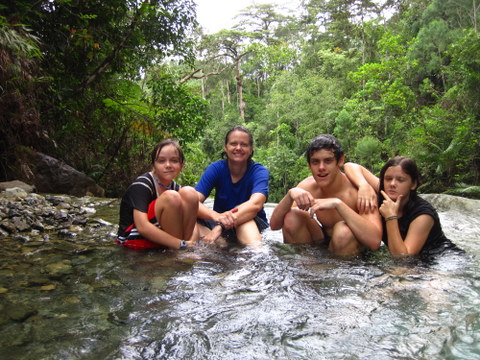
It was really good to have our kids here and spend a week with them!  We visited with Maman and Minan (Uncle and Aunty), and some of the other folks that didn’t go upriver.  Maman told the kids stories about the cannibals that used to live in this area, how they had yellow blood and vertical eyes, and how they were chased away by American soldiers with machine guns after World War 2. It was nice to be together, play games, swim in the river, and let the kids relax from school for their October break. We will see them again in December – please be praying that they will continue to work hard and grow in faith, and that we will be able to have good communication with them while we are apart.

We have some prayer requests that we would like to put before you all. One of us took the kids out to Puerto Princesa to put them on the plane back to Manila. She also took Maman out because he has had a problem in the back of his knee, with some kind of swelling making it difficult for him to walk. In this place, if someone cannot walk, they cannot really live because the environment here is so rugged. So here are our prayer requests:
-         That the doctor would be able to quickly determine what is wrong with Maman’s knee, and if it is surgery to be able to take care of the problem quickly so they can come home.
-         That as our partners write the Gospel lessons, the message will be clear and the hearts and minds of the Palawano will be prepared to hear, understand, and believe.
-         That our language study will progress smoothly and quickly, and we will learn to speak more clearly and effectively, as well as deepen our understanding of the language and culture.
-         That our kids in Manila will have a good semester and have happy hearts, pressing on in good faith. Pray that they will both stay safe in their sporting endeavors, especially our oldest as he plays rugby.
-         That our youngest here in the tribe with us will be able to make deeper friendships with some of the tribal kids, and that the tribal kids, in particular girls her age, will come around more often so that she has the opportunity to make friends with them. Also pray that she will pick up more of the language.
-         Our next door neighbor friend when we lived in Manila just passed away very suddenly from a stroke. Please pray for his family. He was not very old, so this was very unexpected. He was always a help to us when we lived in Manila and we are very sad to see him go.

 flooded river
 worms to eat
 family swim


 visitation from space aliens

Thursday, September 23, 2010

The millipede stone makes you look like lots of people...

Magic stones abound here. I suppose they should really be called pebbles, because they are mostly small items. And they abound only in the sense that they are a big part of the culture in the minds of the people. There are not necessarily that many magic stones. You are not supposed to go out looking for them. You basically just have to happen to find them. A few people have them around here, probably like around 1 out of 10 people. If you happen to find one, put it away and take good care of it, because they are very valuable.

Usually they are found in different kinds of food. The taro stone, for example, was found by a shaman who was eating his taro root, and there happened to be a small smooth black stone inside one of the roots. This stone gave him the power to reduce or remove someone’s anger. Just like when you cook the leaves of this plant – you fill up your pot with the leaves, but when you cook them the visible amount in the pot shrinks down to much less than what you filled it to. So it is with the taro stone – if you have it, and someone is angry and comes looking for you, when they start to get near you, their anger will slowly be reduced. That way, by the time they arrive where you are, their anger will have gone away completely. That is the power of the taro stone.

The centipede stone is another one. If you see a centipede carrying a small rock, you pin it down until it drops the rock, and then you take the stone. This gives you the power to win at gambling, because a centipede is aggressive and hurts anything that bothers it. So you will most likely win, and when you win, whoever you beat will be afraid to hurt you in their anger because of the aggressiveness of the centipede. Note that gambling is not actually part of Palawano culture, but it has been introduced by the lowland people, and this stone specifically applies to relationships Palawanos have with lowlanders who gamble.

One of the guys here was eating monkey one time, and he found a stone in the monkey. So he kept it as his monkey stone. The monkey stone made him especially adept at climbing trees, they say. I asked if he was better than other people at climbing trees, and they said, “about the same.” But the monkey stone makes him really good at climbing trees, and he is not afraid when he gets up high. Also if there is a tree all by itself, with no other trees next to it, he will still be able to climb it easily.

The thunder stone is in a class all by itself and has multiple special powers. It was found when lightning hit a tree (which they said was “bit by thunder”) next to someone’s house, and the stone came out. It gives someone the power to call down thunder and heavy rain on a person who has been threatening someone else.

The coconut stone is really special. It makes a person handsome! Ah, so that is why his wife married him… :)  If you find this stone and put it in a jar with oil in it, and then put the coconut oil in your hair, you look especially good. It also makes people think you are a good person, as in, not someone who would start a fight. Like a peacemaker of sorts. For that reason, people won’t want to start a fight with you.

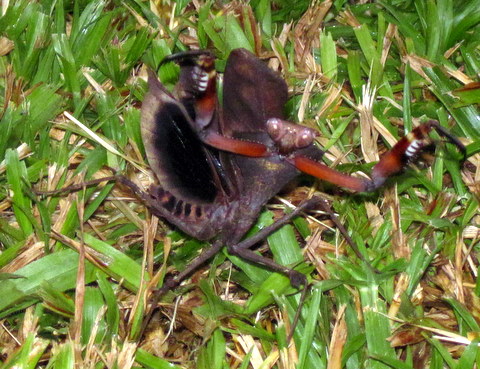
The millipede stone is the one that I found the most intriguing. It makes you look like you are lots of people! If you see a millipede carrying a stone, take it, because it will afford you some special protection. As long as you have your millipede stone, when you go into town or to the market alone, the people there will see lots of people coming, not just you by yourself. Because of this, they will not mess with you – you know, safety in numbers.

I had heard before about the very important rock that the chief found a long time ago, but I didn’t know there were multiple classes of magic rocks before all this came out a few days ago. It is interesting how all this came about. I was asking questions about what someone should do if they find different things walking through the forest. I was asking about items of different value in order to compare the pattern of speech regarding finding things of great value (like lots of money) to finding things of basically no value. Since rocks are very common, I figured they had no value, so I asked my language helper what he would do if he found a box with a rock in it in the forest. Well, ironically there was a treasure trove of information in asking about finding a rock!

Life in the jungle continues…

Wednesday, September 15, 2010

why there are so few fish in the river today

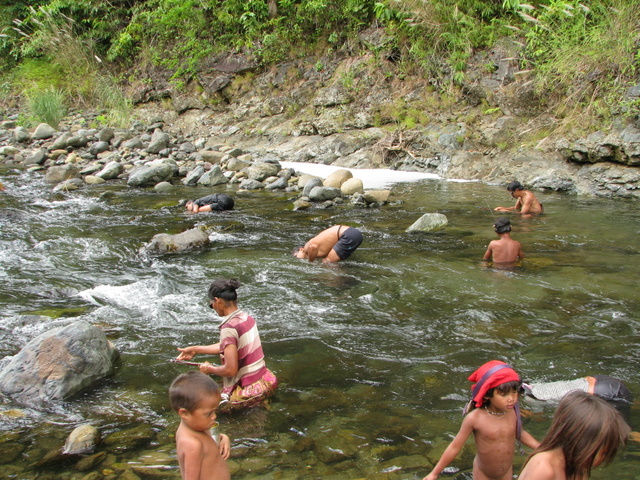
I was talking to my language helper the other day, asking if he knew how to swim as a kid. He said no, because there were no deep pools in the river when he was a kid. I was wondering about this, because the river is full of deep pools all up and down the river, and people talk about how in the past the pools were much deeper. So I asked him to explain.

It’s like this, egsa. When I was a baby there were many many deep pools in the river. There were also many many fish. In all the deep pools of the river you could just go and fish whenever you wanted and catch lots of fish. I don’t remember it because I was only a baby, but my parents and my older siblings told me about it. One day one of our friends went down river to town and bought some poison over the counter. He had decided to use it to catch fish. He went to one of the big pools in the river and threw out the poison. He caught lots and lots of fish. Way more fish than he could eat – there were a lot that were wasted. They had to bury the extra fish by the side of the river.

The river god saw this and was angry so he sent a big flood. The big flood washed all the fish away and filled in all the deep pools with rocks so that they were shallow now. So when I was old enough to start swimming, there weren’t any deep pools for me to swim in. Later when I was older, there were other floods that washed out some of the deep pools, so I was able to learn to swim. But they have never gotten as deep as before the big flood.


We knew about the big flood – everyone talks about it. It happened about 4 or 5 years before the first missionaries arrived here. It actually filled in the area where our airstrip is now with lots of rocks and mud – giving it a good foundation.

If there is some kind of disaster, like a big flood, or a drought, or the crops are all eaten by bugs, these are considered a judgment by the gods because of a particular sin that someone has committed. When we were back in the States for the summer, 2 young couples got married here. However, they did it the wrong way – they just got together without involving the chief or anyone from their respective families. They were both fined a very high fine – 1000 pesos each. That is about 25 dollars. They also had to give the chief a white chicken and a ceramic plate to appease the wrath of their deity, so that he will not bring upon them another crop failure, landslides, big flood, or whatever he chooses to punish them with.  He cut the chicken in half, threw half in the river and half in the air (that should stop the flood and make sure everyone gets enough rain for their crops). Then he smashed the ceramic plate, symbolizing that their sin was broken.

We have several prayer requests right now for things coming up, so we would appreciate if you would lift these things up!
  • I have a language evaluation coming up in a week and a half. Please pray for my mind to be clear during the process so that the consultant will be able to accurately determine where I really stand in the language!
  • Our partners are preparing the Gospel lessons for the beginning of teaching the Gospel to the Palawanos! Please pray for wisdom and guidance as the lessons are written, and that the hearts of the Palawanos will be prepared to listen to the message and receive it with joy! The process of writing lessons will take a few months, so please pray also that they are able to take the time to make things clear and easy to understand.
  • After my language evaluation, I will be flying out with the consultant to visit some of the other tribes and assist in their language evaluations. Please pray for safe travels!
  • There have been a number of problems between Palawanos and Visayan people that live down river. These have mostly been problems because they sell alcohol every Thursday at the market there, and men get drunk, and then they haul off and start hitting each other. Things have recently escalated into threats of more extreme violence, with some men down river threatening to come up here and kill the Palawano men they got in a fight with. Please pray that peace will rule and people will calm down and get their heads on straight about this.
  • One of our son’s teachers at the missionary kids’ school, who also happens to be his rugby coach, has been very low on support and has not yet returned to the Philippines. (In fact, many teachers have been so low on support that they could not come to the school this year, and some important classes have been cancelled). We would ask you all to pray that the Lord would raise up more support for this man’s ministry. We feel that he in particular is a strong benefit to the school and our kids, and is also supposed to be Isaac’s bible teacher next semester.  In particular, if you know of anyone that is looking to support a missionary but doesn’t know where to give, we have the information on how to support this individual, and you can email us.

After our language evaluation and my assistance to the other tribes, our kids will have their October break from school, and will fly into the tribe to be with us. We are looking forward to that!

Blessings to you all in Christ for the Gospel


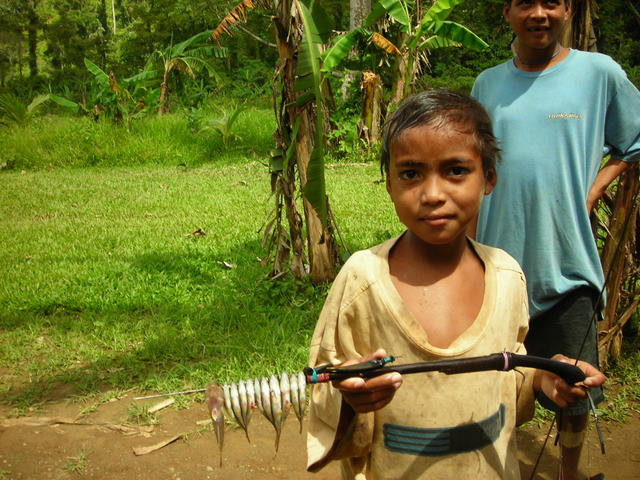
Fishing is a regular source of protein for the people.There used to be many more fish in the river before the big flood, according to what people say.

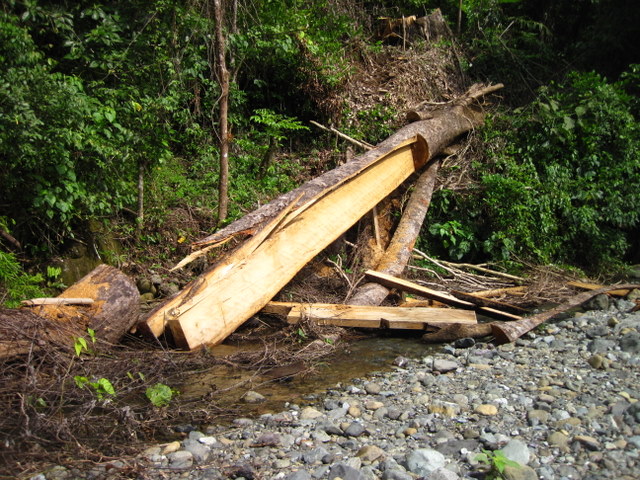
someone from downriver cut up this tree for wood, but before it was all used up the remainder was washed away in a flood last week
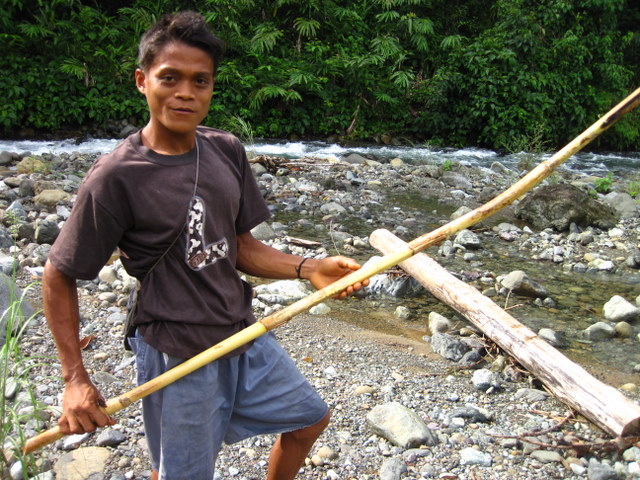
rattan vines from the jungle cut up and sold by the bulk to furniture makers is a source of income for the Palawanos
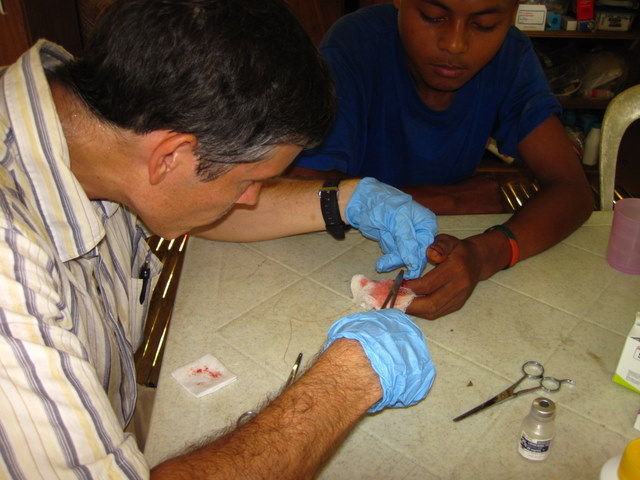
This young man needed stitches. He said the reason he cut himself was that he was working on a Friday, his holy day, and so he was punished for that by the spirits, his god, or bad luck when he accidentally sliced himself..
cooking rice over an open fire in a grass house

Monday, August 30, 2010

Runiliyu


One of the kids here in Palawano land is called Runiliyu (not his real name). He is one of the first kids that was open and friendly to us. He is about 10 years old (we think – nobody really knows how old anybody is). When we first moved in, he showed our kids where the swimming hole was and how to jump off the rocks into the deep part of the water so they wouldn’t get hurt. He is always helpful, and is one of the few people that seems to give to others without expecting anything in return. He seems to have some kind of natural noble character.

One of the early incidents with him was when our kids were all swimming together and he slipped on a rock by the swimming hole and hit his head, causing a big gash. All the other tribal kids looked at him and pointed and laughed, calling him “stupid” for falling and hitting his head. That is what they do when other kids get hurt. Our son gave him a piggy back ride up from the swimming hole back to the medical clinic where we stitched him up.

Even though there was that one incident, the other tribal kids do respect him. There are not really a lot of kids around, because the Palawanos live in such a scattered lifestyle. Each family lives out at their own farm, although sometimes 2 or 3 extended families choose to live close to each other, making what seems to be almost a small village. Runiliyu lives in a family of 7. Several of his brothers and sisters died when they were babies, before the missionaries came here and started giving out malaria medicine. His father died about 4 years ago due to complications from malaria and a liver destroyed by alcohol. Since then his mother re-married and added one baby to the family. His older brother is deaf and has a hard time getting along with people, so Runiliyu has sort of taken over the role of being the respectable oldest son of the family.

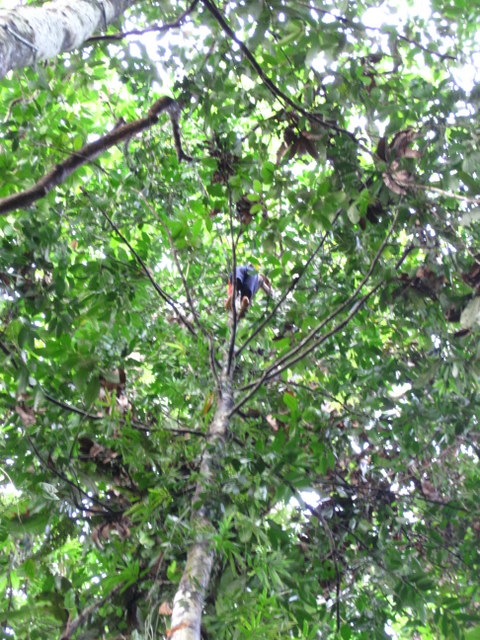
The other day I went with him to the jungle where he climbed up a 50+ foot tall tree to get some natural fruit, which he later shared with our family. It was amazing to see him scale up this vertical tree with ease to get the fruit up at the top of the tree.

This morning I needed someone light to climb up on my solar panels and clean them off. I am heavy enough to possibly cause damage to the panels or the supports if I try and clean them off myself (and I am pretty light by American standards). Runiliyu is a very diligent kid, and since I have seen him climb those very tall trees without a problem, he is perfect for helping me out with this job. He was more than willing to do it, so we went up to the roof and he cleaned the panels while I stood by holding the safety rope. He is probably pretty excited about this too, because he can now brag to his friends that the missionary chose him to climb on the roof and clean the solar panels. He is not a bragging type, but if he wanted to brag about this particular incident nobody would fault him for it. Besides that, he was happy to earn a little extra money, and I was happy to pay him, since I am not able to do the job alone.

We interact with the Palawanos like this all the time. We go to their houses and visit; they come to our house and visit. We help them with medicine, and they help us get things done that we cannot do by ourselves. With this type of interaction, we have developed a closeness with the people around us, and our relationships are growing. And since they don’t know English or Tagalog, we have to use the Palawano language to communicate with them.

This kid is someone we would really like prayer for. We see in him, and in other Palawano kids like him, the future leaders of the church. As we talk with people during this time of pre-evangelism, please pray that the Lord will open the heart of Runiliyu and his family to the Gospel.
Runiliyo 2 years ago with a big catch of river fish
climbing to the top of the tree to harvest the fruit

Monday, August 23, 2010

Back in the tribe


Yea, back to the tribe! Home at last!

We arrived home last Wednesday, and as usual, had an incredible amount of cleaning to do. There were very few people around – mostly because (as we found out later) they are all at their farms. It is the middle of harvest time, and they do all their harvesting by hand, so they are pretty busy. There were, however, about 3 guys here, which was enough to help carry our cargo up from the airplane to the house. It is always nice to have that, seeing as how I have a bad back and it is difficult to do a lot of lifting and carrying.

The few people that were here wanted to visit, and of course we want to visit too. However, we had to set up the beds, turn on the freezer, unpack, wipe off all the counters and do all kinds of things to make the house ready to live in again. So our visiting was minimal as we were working. The weeds around our house were totally overgrown – hence many people coming by and asking if they can pull weeds for us (for pay, of course). So we set up a time to do that, which makes them very happy, because they get some work, which results in some pay, and then they can go downriver and buy things they need at the market.


One of the first things in the house I noticed was that the water level in our batteries was very low – below the plates. I had about 9 liters remaining from the last time I filled the batteries, and I knew that would not be enough water to fill the batteries up all the way. However, I thought it might be enough water to fill up to just above the plates, but I would have to refill the batteries in a few days. I prayed the water would be enough and started filling. When I was done – I had just about ½ a cup of water left! Wow! Thank you, Lord, for your provision of allowing the water to be just enough!


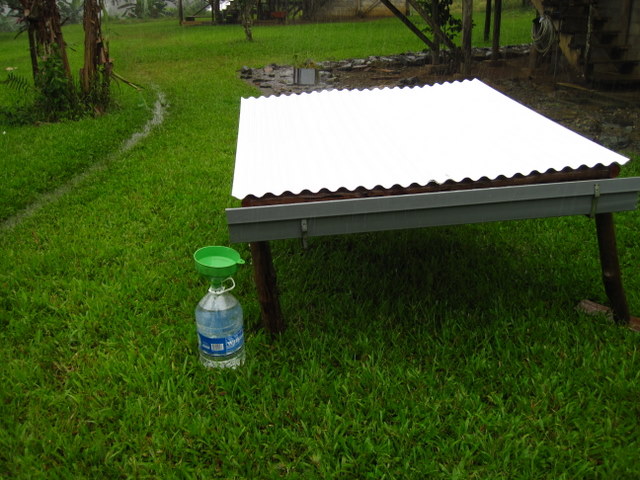
rain catcher
So that meant I would have to build a rain-catcher. I had been meaning to do that for some time. We can’t use water off the roof because of the metal screws in the roof – it would add enough metal ions in the water to destroy the batteries. And the water in the pipes also goes next to metal, so it won’t work either. It was the next day that I was able to build the rain catcher, and day before yesterday I was able to finally finish filling the batteries! Our batteries used up 18 liters of water while we were gone!

It has been really good to see people! We are so glad to be back. I haven’t had time to do any updates until just now. My bride spent the last 5 days preparing the house for living,preparing home-school lessons, and getting the clinic ready for today. I spent the last 3 days preparing my office to be used again – man it was a mess! The others in the house said they don’t recognize my office anymore because it is clean!

What other things did we do? Oh yes, I installed the cell phone signal repeater. That was great! Now whenever we turn it on, we have a strong enough cell phone signal in the house to actually call on our cell phones! Before, it was just good enough to send text messages, and we had to keep the phone leaning sideways on the radio on top of the dresser next to the freezer. If I wanted to have a sure call, I had to hike up the mountain on the other side of the river where the signal is strong. Now we are in a place where we can make or receive an emergency call. I leave the amplifier off normally so as not to use up a lot of solar power.

The other big thing is that I was able to purchase and install a floor covering for the kids room. They said that they didn’t like to play with their legos because they always fell through the cracks in the bamboo floor, so we purchased a plastic/rubber covering for the floor. It is quite nice now!

And my last task before beginning study preparations again is to set up this blog! Hopefully this will give a means for people that regularly pray for us a means of having more timely information.

And as far as the tribal people, they are all up in their fields harvesting rice! Here are some highlights:
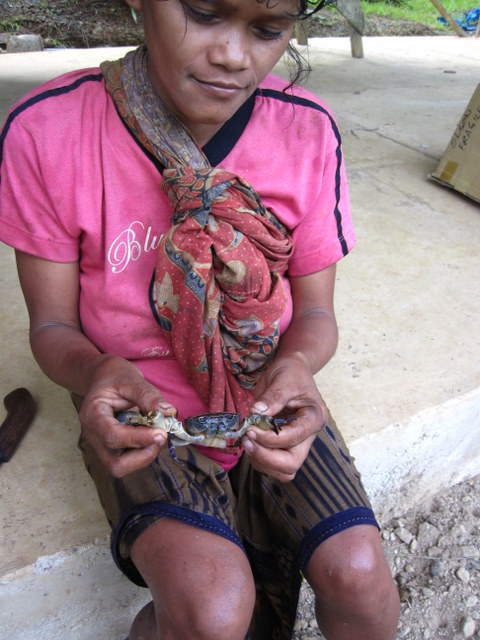
•    One lady came by this morning and had some river crabs she had caught and killed. They always kill them right away, but they wait several hours before cooking them. Her husband told me about the wild pigs he shot while we were gone. He said he is out of shotgun shells.
•    Many folks asked if they could buy batteries for their flashlights.
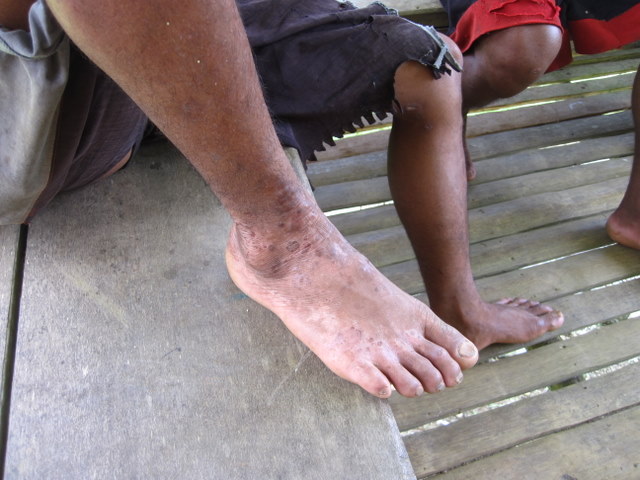
•    There was a kid who had tons of warts covering both of his feet before we left. We gave him medicine to put on the warts every day while we were gone. He came by yesterday and showed us his foot – no warts! Amazing!
•    We gave away a lot of malaria medication the last 3 days even before we opened the clinic, and gave away a lot again today at the clinic.
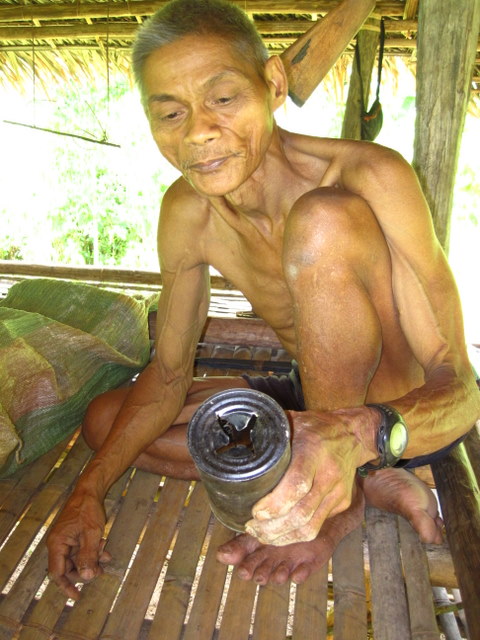
•    The village chief (I say “village” loosely because they don’t really live in villages) showed me a new kind of pig trap he is making that will not accidentally snare dogs or other animals – only pigs!

And, as always, it is time to get used to the constant attacks of biting bugs!

no more warts!
a new kind of pig trap that only catches pigs

river crab